
Is Marine Biology Worth It? Salary, Jobs, and Career Reality
Last Updated on July 13, 2026 by Salty Sereia
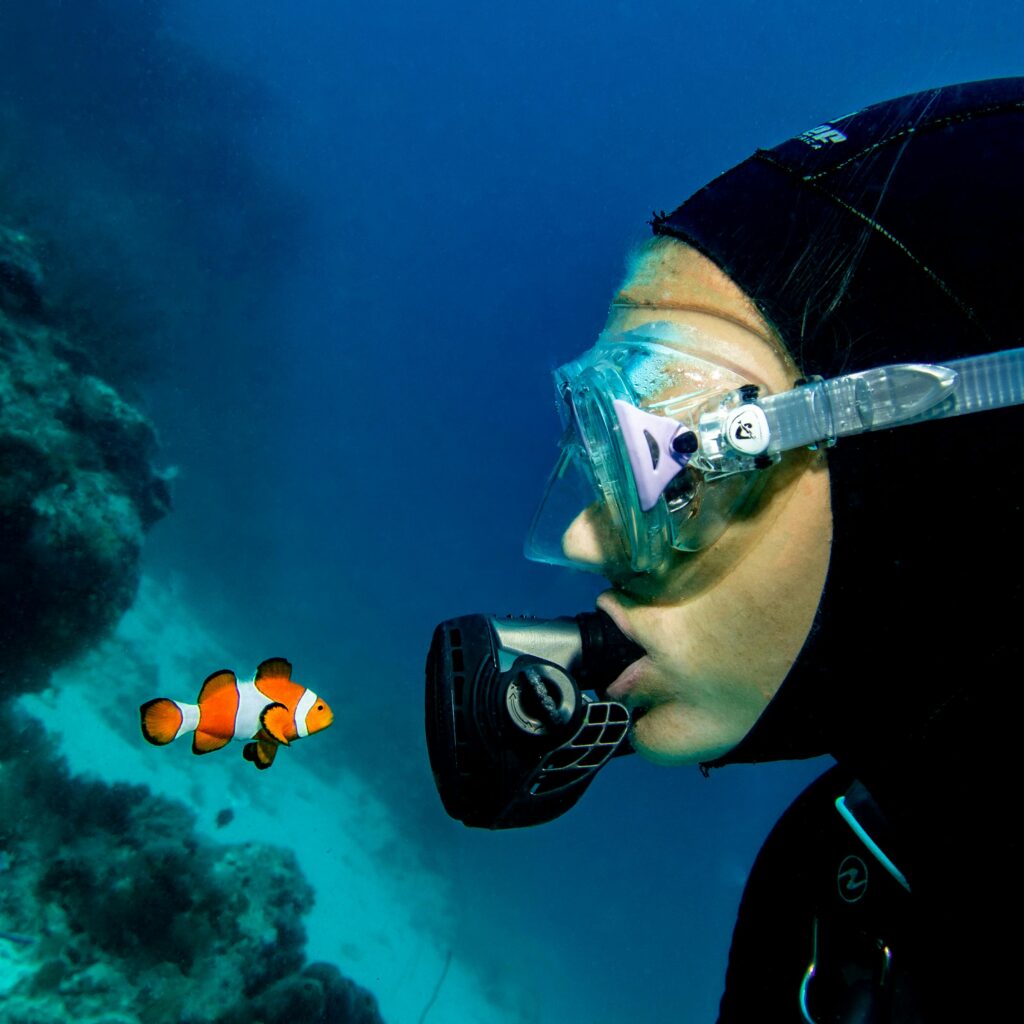
If you would’ve asked me if marine biology was worth it when I was younger in my career, I would’ve given you a big fat resounding yes. Now mid-career and almost 20 years into my field, I feel a little bit saltier, if you will.
It is definitely a fulfilling job depending on the work you do. The work that most marine biologists want to do is field-based work that usually involves scuba diving, or being on a boat, or swimming around in the water. AND there are jobs like that out there.
I will say, I’ve managed to find that sweet spot in New England; the kind of job that gives you a middle-of-the-road mix of data analysis and fieldwork. But even then, the max I’ve made is around $80K, and that’s with a master’s degree and almost 15 years of experience.
Long story short, better-paying jobs often come with less fieldwork, and the closer you get to leadership, the farther you may get from the ocean. Don’t get me wrong, you will do it occasionally, just not as often as when you first start out in your career. Because you get expensive and technical, and they rather you spend your time writing grants or analyzing data and having the early career folk SCUBA diving.
Then there’s also working in academia, which a lot of people like. For me, I didn’t want the high stress, academic politics, and all d*ck swinging that came with it. My initial desire to do marine biology was that I wanted to contribute back to the earth and enjoy what I was doing along the way.

Mid-Career Burnout in Marine Science
Mid-career, I had a falling out with my relationship with marine science. I was tired of not making any money and having to lean on my partner’s job to really pay the bills. I hated the government work because it was a lot of bullshit. At least for state job, it was like nickel-and-diming every hour you took off, and signing in and out of leaving the office, not to mention the shitty state benefits.
I was also tired and burned out by giving everything I had and it never being enough. Even when I gave my all and then some, it was just expected or unappreciated. So then I just stopped giving a f*ck, and honestly it was the same. So I stopped making an effort.
What used to be a passion of mine turned into straight-up burnout after almost twenty years, and I was starting to fall out of love with my career. Getting in the water year-round used to make me feel badass, like I was tough as shit for handling 30-degree water, but eventually that got old.
Even in a 7 mm wetsuit, I was still fucking freezing. My lips were numb. I’ve had to break through ice just to get into a saltwater pond to check on our restoration work even though I already knew nothing was being f*cking restored there. But my boss wanted me out there every two weeks because his ass didn’t want to get in the water.
And the worst part is, you just have to do what your boss tells you, even when it’s stupid. I effin hated it. I wanted to work for myself. I wanted to work on my own terms instead of listening to someone give me a dumbass idea when I knew I could do it better.
Or better yet, I was tired of them taking credit for me funding grants or taking credit for my ideas. Or them knowing what I’m worth but assuming I’ll take shitty pay because it’s marine biology.
And you know what? They were right. I did.

The Sad Reality of a Marine Biology Salary
Let’s not sugarcoat it: marine biology isn’t a cash cow, but you can make a living.
You’re probably thinking, “how the f*ck is the earth 70% water, yet marine science is one of the lowest-paying science careers?”
It’s a “passion field,” like art or environmental advocacy, so there’s often more qualified applicants than jobs. Employers don’t have to offer high pay to attract skilled candidates; people do it for love of the ocean, not the paycheck.
Here’s a rough breakdown (in the U.S.):
Bachelor’s (B.S.)
~$35k–50k/year
This is usually where you’re doing the grunt work:
lab tech, field tech, seasonal assistant, aquarium work, entry-level nonprofit jobs.
Reality check:
A Bachelor’s can get your foot in the door, but it often comes with temporary jobs, low pay, constant moving, and a whole lot of “great experience” instead of actual financial stability. A lot of people leave the field within 3-5 years because rent exists.
Master’s (M.S.)
~$55k–80k/year
This is where more people start landing jobs like project scientist, government roles, restoration work, consulting, or nonprofit program management.
Reality check:
A Master’s is now kind of the minimum to be competitive in a lot of marine science jobs. The pay is better, but this is also where a lot of people plateau. You’ve got more responsibility, more skills, and still may be underpaid for what you bring to the table. This is where most mid-career marine scientists plateau and burn out.
PhD
~$70k–100k+ (but don’t get excited yet)
This is where you get into professor roles, principal investigator work, senior scientist positions, and high-level consulting.
Reality check:
Yes, the ceiling is higher. But so is the cost. You’re usually signing up for another 5 to 7 years of school, low paying post-doc positions after obtaining your degree, and a very real chance of still not making the kind of money people assume comes with that level of education. Some people crack six figures. Plenty don’t.
And that’s really the part no one says loud enough.
Marine science can absolutely be meaningful, interesting, and fulfilling. But fulfilling does not automatically mean financially sustainable.
That doesn’t mean don’t do it. It means go in with your eyes open.
And if you’re still figuring out how to even break into this field without committing to a full PhD, I break that down more in my post on how to get into marine science without a PhD.
Because yes, you can build a marine science career without a doctorate. You just need to be strategic about it.

Why Employers Don’t Reward Loyalty in Marine Science
Employers don’t really give a shit about you.
They’re trying to fill a position. That’s it.
I’m not saying there aren’t good people out there. There are. But at the end of the day, this is still business. So don’t take it personally when loyalty isn’t rewarded the way you thought it would be.
A lot of organizations are not bending over backwards to keep you. They might be sad to see you go, sure, but mostly because you were doing good work for cheap.
And that’s a hard pill to swallow.
A lot of government jobs especially hide behind bureaucracy, union rules, or budget limits with the whole “nothing we can do” routine. Maybe sometimes that’s true. But a lot of times, it’s just easier for them to replace you than fight for more money or flexibility.
That’s been my experience working for a town, a state agency, and the federal government. Loyalty did not lead to raises. Working harder did not magically make people value me more. In a lot of cases, the only real way to move up was to switch jobs, gain new experience, and keep it moving.
I wish I understood that sooner instead of thinking if I just worked hard enough and stayed loyal, it would pay off.
Sometimes it doesn’t.

So, Is marine biology worth it?
Depends.
Depends if you have a rich partner. Depends if you can afford a passion job.
Just know that oftentimes you might be overworked and underpaid, but the work itself can be fulfilling.
Do I regret my decision to become a marine scientist?
No.
Because it led me here. I’ll always love the ocean.
I just have a more realistic view of what the career entails now.
And honestly, I would probably still go through the same career path again, because I couldn’t imagine myself doing anything else.

Questions to Ask Before Choosing Marine Biology as a Career
- Can you live on the salary where you want to live?
- Are you okay relocating for jobs?
- Do you value purpose over money right now?
- Do you want stability or adventure?
- Marine biology isn’t a bad career.
It’s a high-tradeoff career.
if you go into it, go in with your eyes wide open. Don’t do it just because you love dolphins, the ocean, or the idea of having a cool job title. Do it because you understand the sacrifices too; the pay, the competition, the instability, the burnout, the moving around, and the very real chance that the dream job won’t look exactly how you pictured it.
But also know this: a lot of people spend their lives working jobs they hate just to survive. So, there is something powerful about doing work that actually means something to you.
That’s why this isn’t a simple yes or no.
If you want a career that will probably make you rich, this ain’t it. If you want a career that can be meaningful, adventurous, and occasionally badass as hell, then yeah, marine biology might absolutely be worth it.
Just don’t romanticize it.
Respect the tradeoff.
And make sure the life you’re building around the job actually works for you.
Because loving the ocean is one thing.
Building a life around that love is another.
Love,
You May Also Like

How to Get Into Marine Biology Without a PhD

How to Have Confidence in STEM as a Woman