How to Get Into Marine Biology Without a PhD
Last Updated on July 12, 2026 by Salty Sereia
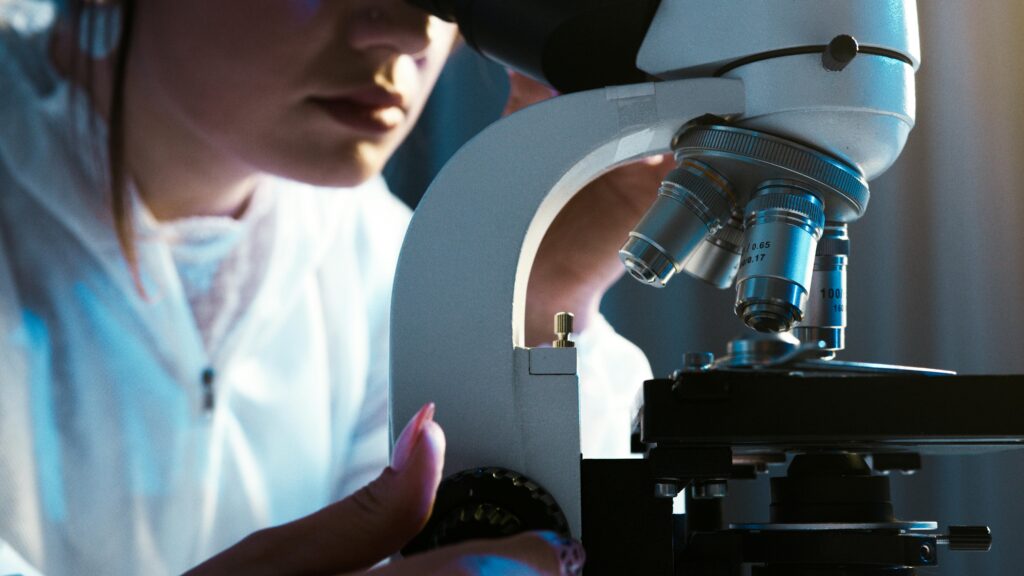
So you want to know how to get into marine biology without a PhD? Do you know how many people respond with “oh I wanted to do that when I was little” when I tell them what I do for a living? Yeah, we can thank Splash, The Little Mermaid, and Free Willy for glamorizing this career. But here’s the reality about jobs in marine biology, you most likely will be staring at plankton under a microscope and the only whales you will ever come close to will be on a whale watch your Aunt Lisa booked for the whole family on Christmas Day.
Don’t get me wrong, there are the rare exceptions who get to work with cetaceans (dolphins, whales, porpoises). But they’re the marine biology version of lottery winners: rare, mythical, and probably not you. So now that I’ve squashed your dream of riding whales full-time (no shade—Whale Rider is still my all-time favorite movie), let’s talk about how to actually break into the marine science field AND make it lucrative. And by lucrative, I mean “can afford groceries and maybe a kayak if you’re lucky.” Just kidding, sort of.
Marine Biology VS Marine Science:
First, let’s get the terms straight. Is it Marine Science? Marine Biology? Marine Ecology? These terms get tossed around like they’re the same thing, but they’re not. If you want to sound like you know your shit, let’s break it down:
Marine Science – The umbrella term for all ocean-related jobs.
Marine Biology – The biology of ocean life (think fish, whales, and, yes, mermaids).
Marine Ecology – How ocean life interacts with each other and their environments (my personal jam).
Oceanography – The physical, chemical, and geological processes of the ocean (currents, seafloor mapping, acidification).
There are a billion niches in marine science. These are just the big ones IMHO.
How I Got Into Marine Science
Back in high school, I was good at memorizing (still am quite frankly). And since biology tests in HS are basically just flash cards on steroids, I was really good at it. Then when it came time to figuring out what I wanted to do with my life at 18, I decided Biology was the way to go as a major. I was torn between going into the medical field (hello money) or marine biology (hello fun). And with general biology it would be a good base for med school or marine science for my master’s degree or PhD. So I played it “safe” and stuck with general bio as my major. I figured it’d give me enough range to go either way.
The shit I wish I did was take even one elective that leaned marine—like fish ID or oceanography or literally anything ocean-related. That would’ve made grad school feel less like drinking saltwater through a firehose. Fortunately I did manage to work in an ecology lab as a field and lab tech for a PhD candidate (who literally spent 7 years only to quit and tell me she wanted to be a yoga instructor instead).
I got my BS in Biology from a school on the East Coast, then bounced over to the West Coast for my MS in Marine Science. But there was a five-year “figuring-my-shit-out” gap in between. I spent 2 years in the Peace Corps, worked as a lab tech and naturalist at a science center, volunteered at an aquarium, and worked at a seafood restaurant (hey, I was trying to keep it all related). I’ll break that five-year saga down in another post. Drop a comment if you want to hear my “messy” middle.
Why I didn’t get my PhD
I finished my M.S. degree after 3 years at the ripe age of 27. Average years of completion for a doctorate is 5 years given there are no setbacks (babies, death, field experiment fails). And honestly I didn’t want to pigeon hole myself into a specific career and I thought the only job I could get with a PhD was being a professor (and F that noise). Occasionally the thought crosses my mind but again, I think I’d only want to get one to say I had the highest degree in my field and that’s not a good enough reason to spend 5 years getting paid peanuts to get another degree. I prided myself on being a jill of all trades as I thought I was more marketable as opposed to being stuck researching diel vertical migration of zooplankton in Humbolt Bay. Also three years of my M.S. degree was enough to not want me to repeat that experience (but I had a pretty poor experience and not all programs are like that). But hey it’s the lesser of two evils and a means to an end.
Marine Science Jobs Without a PhD
The hard truth is you’re gonna need more than a B.S. degree. It’s 2026 and after the pandemic, everyone and their mother went back to school and got 2nd and 3rd degrees. So that means you’re swimming in a highly competitive pool. These days a M.S. is now basically the new B.S. That said, you can still find decent jobs in marine science with a B.S. degree but it will probably be low-paying or you will end up being stuck in a lab doing grunt work, and it may take you a long time to climb the ladder. I know I needed to be more specialized, especially in a field like marine biology where people are willing to accept garbage pay for the “fun” jobs. So what jobs can you actually get without a PhD and what degrees do you really need for those roles? I will be honest and say the more degrees you have, the more competitive you are, and the higher your salary will be (but this isn’t always the case).
Policy: Think government regulations, meetings, environmental law, and lots of paperwork, meetings, and screen time. Good for folks who can speak science and bureaucrat. Can get a job with a Bachelor’s degree, if you have experience in this field, but most likely you’ll need a Master’s degree.
Government: State or Federal jobs, broad range that encompasses policy, research, resource management, permitting and environmental review, etc. Some positions blur the lines between science, policy, and management. Good for stability, benefits, and broad impact (but also bureaucracy). Can get a job with a Bachelor’s degree, if you have experience in this field, but most likely you’ll need a Master’s degree.
Academia: Think leading research, publishing papers, grant writing, course development, students, and tenure-track stress. This path usually does require a PhD, but there’s some wiggle room; at certain universities, you can snag a adjunct/lecturer gig with just a Master’s.
Nonprofits: Mission-driven organizations that focus on ocean conservation, research, education, or policy advocacy but don’t exist to make a profit. Instead, they rely on grants, donations, and memberships to fund their work. Can get a job with a Bachelor’s degree, depending on the role.
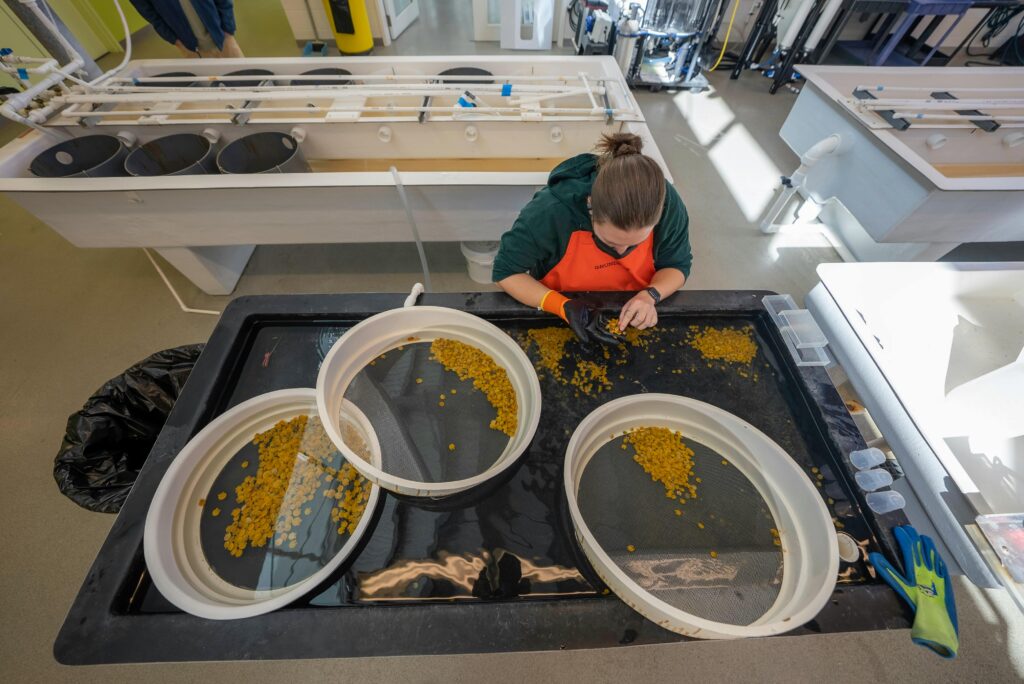
Research and Field Science: Think boots on the ground, asking questions and conducting research to find the answer. Depending on your degree, you’ll mostly be assisting research scientists. Think: Data collection, sampling, lab analysis, assistant scientist, field tech. Can get a job with a Bachelor’s degree, many labs will offer entry-level positions.
Industry (aka the private sector): This is where science meets business. Higher pay, faster pace, and often more structure than the nonprofit or academic world. You’ll most likely need a Master’s degree.
- Environmental Consulting: Think money, tight deadlines, and long hours.
- Fisheries/Aquaculture: Think hatcheries, seafood companies
- Marine Technology: Think ROVs, sensors, ocean engineering.
Now don’t get me wrong, there are tons of other gigs connected to the ocean: tourism and recreation, marine outreach and education, even creative and media work tied to marine science, but you don’t specifically need a marine science degree to break into those fields. The more technical STEM jobs, though? That’s a whole different beast. 2020 pushed a lot of people back into grad school, which means more PhDs in the job pool. That doesn’t mean you’re screwed, it just means you have to be strategic. If you’re aiming for roles in research, restoration, or anything that screams “science,” you’re going to need a specialized degree to even get in the door. No shortcuts here.
How to Start Your Marine Science Career
If you’re just starting out, or thinking about switching careers after reading this blog and realizing how badass marine science really is…
Get Educated
- Get a degree, or enroll in marine science courses that might help you with particular field that you are interested in (online or in-person, think aquaculture course if you want to own your own oyster farm)
- Take electives that align with your goals (e.g., fish identification for fisheries jobs)
Get Certified
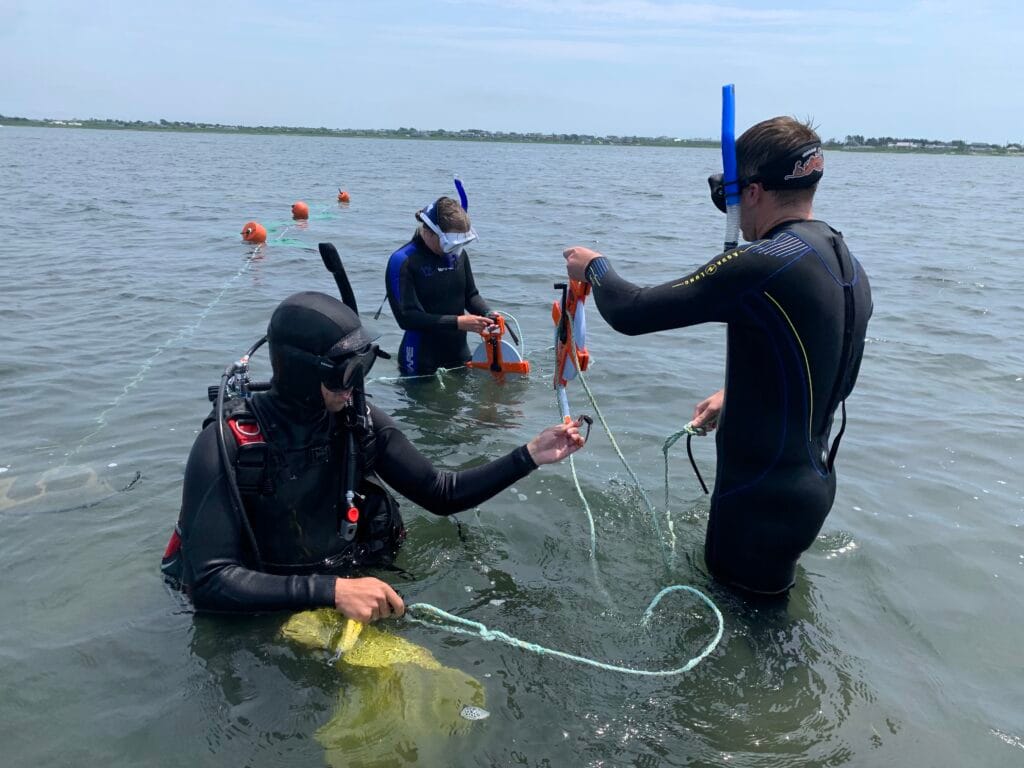
- SCUBA, boating courses, etc., can give you an edge for certain field jobs and make you stand out
Volunteer or Intern
- Yes, even as a 30-year-old with two degrees, I’ve basically interned—just under the more glorified title of “fellow.” But let’s be real: same shit, just a fancier name.
- You can find marine biology volunteer programs or internships at aquariums, research nonprofits, or conservation orgs and see if you can assist with anything just to get your feet wet (wink). Most orgs don’t even know what to ask volunteers to do, so showing up with suggestions will help sell you.
- Aquariums usually need help with cleaning and monotonous tasks, or with outreach and engaging the public (HELLO, public speaking practice). Nonprofits or university labs might need help with data entry (HELLO, database management experience). Yeah, these tasks might seem boring (and trust me, they are), but this is where you need to be your own best advocate.
- Ask questions.
- Ask to shadow their tasks.
- Ask what they’re doing in the lab.
- Ask if you can help with other projects.
- Be an opportunist!
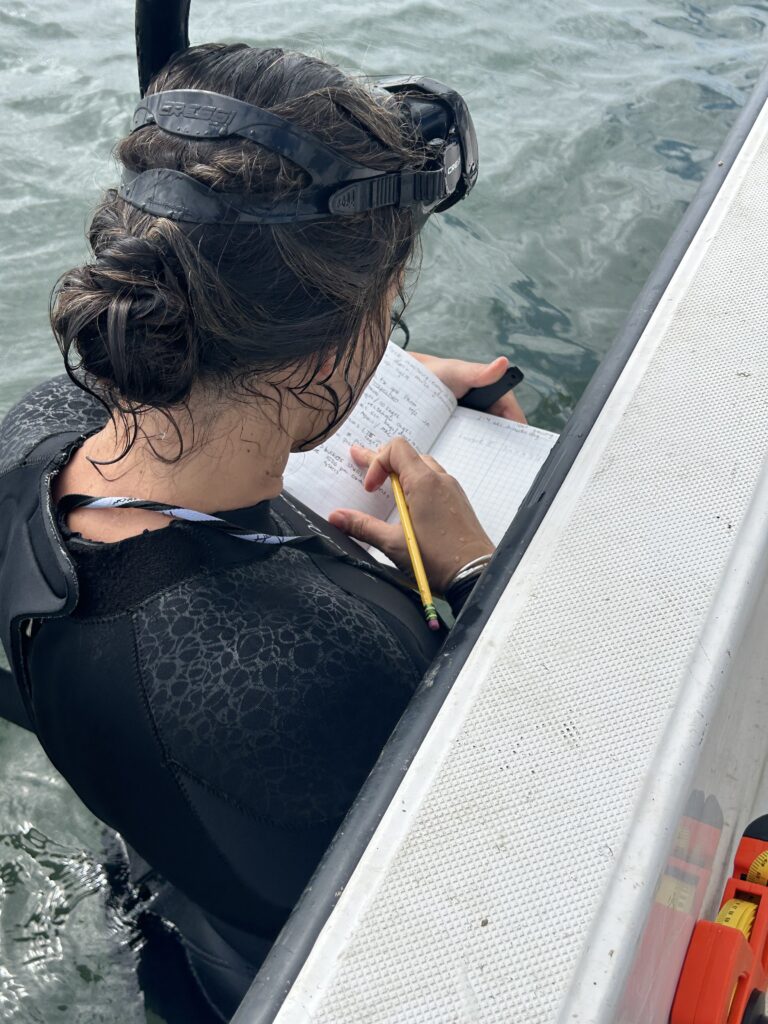
And for the love of God—write down your tasks and accomplishments. Find a way to spin them into something impressive for your resume, but remember, there is a fine line between accentuating your tasks and exaggerating your tasks. I once had an intern write on her resume that she “operated a 22-ft boat and supervised other interns while the lead biologist (me) was away on vacation.” The reality? I asked her to remind the interns to clean the tanks and she drove the boat once for maybe five minutes in open water.
I’m all for selling yourself, but do it in a way that’s strategic and true. Otherwise, someone’s going to ask you in an interview if you can trailer a boat, launch it, drive it, and dock it like a boss; and you’ll be caught looking like an ass if you can’t.
Network Like a Pro
- Connect on LinkedIn with people working in marine biology or places that you want to work. I always answer requests and will even meet people in person if I can. I have had many scientists do that for me in the past and it was so helpful.
- See if you can find some connection to introduce you so it’s not a completely cold email (think: a professor who has a friend of a friend working at the place you’re eyeing or doing the sh*t you want to do).
- Cold email professors or grad students at universities doing work you admire or are interested in.
- Heads up: grad students are stressed and underpaid, if their responses are short or salty, don’t take it personally as they are hating life right now.
- Go to Conferences
- A lot of conferences these days are virtual, free, or discounted for students and early-career folks. Even if they’re not, email the conference organizer and plead your case, tell them how badly you want to go but don’t have the funds.
- A motto I live by: “It’s always a no until you ask.” So you might as well ask—you may be surprised at who says yes. Show up. Ask questions. Follow up. That’s how you make it count instead of walking around trying to avoid people and secretly hoping no one talks to you.
How to get into marine science if you don’t live near the coast.
What to do if YOU don’t live on the coast. Move. You’ll like it here better anyway. Just kidding (but seriously). Take some online courses as some may be free for students (if you are in HS or middle school). Volunteer locally — aquariums, zoos, watershed orgs (even freshwater experience is still a good foot in the door). Research online all things marine science and use your library (sometimes it is better to do your research through a good old fashioned book (I’m showing my age here). Research schools on the coast with a good marine science program. You also don’t need to go somewhere warm for marine science. I studied in New England—no tropical coral reefs, just cold dives and shitty vis. I figured Hawaii was already oversaturated with marine biologists, so I carved my path here.
Final Thoughts: Marine Biology Without PhD = Possible
Marine science is a small, scrappy, passionate field. Whether you have a PhD or not, there’s room for you, if you’re willing to:
- Work hard
- Be resourceful
- Be an opportunist
- And get a little muddy along the way
Basically if you want to become a marine biologist, you can. And you can do it without a PhD. I truly believe you can accomplish most things if you really want to, it’s just how hard do you want to work for it? So yes, it will be hard. But let’s be real, isn’t existing hard? So why not work a little harder for a life that’s actually fulfilling instead of coasting through on autopilot at a job that doesn’t light you up? Here’s the thing: most people take any job that pays, live for the weekends, and use their paycheck to fund a “weekend lifestyle.” But when you add up all those weekday hours, you realize you’re spending the majority of your life at work. So you might as well find a job you actually like. Because at the end of the day? Money doesn’t buy happiness. Get the uncensored career advice I wish someone gave me.
Love,
You May Also Like

Midlife Career Change: Why I Left My Dream Job at Almost 40
Is Marine Biology Worth It? Salary, Jobs, and Career Reality